Inside Aurakore Finance and Accounting, where the AI suggests and a person confirms
How the Aurakore ERP Finance and Accounting module connects live bank feeds, quote-to-cash, multi-currency and built-in FP&A on one ledger, with a person confirming what posts.
Finance teams do not need an AI that posts to the books on its own. They need one that does the sorting, shows its reasoning and leaves the decision with the person who signs off. That is how the Finance and Accounting module in Aurakore ERP is built.
A real ledger underneath
The module is a double-entry general ledger with a chart of accounts, journal entries and legal entities, plus receivables invoices and payables bills. Every Finance page runs on live data: there are no sample screens.
Bank feeds: the AI suggests, a person confirms
Connect your bank accounts through live bank feeds, or import OFX and QFX statement files. Each transaction arrives with a suggested general ledger account and a confidence score. Your own rules apply on top, and transfers between your accounts are recognized. Nothing posts until a person confirms it, and a posted entry can be reversed with its history kept.
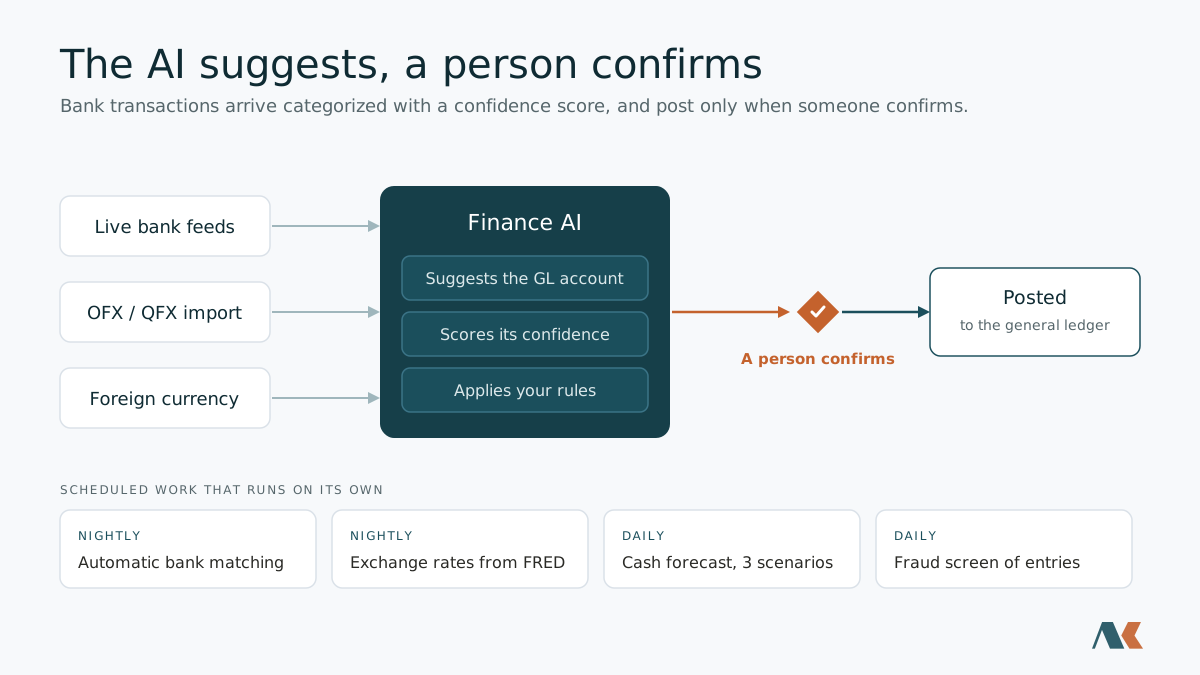
Scheduled work runs on its own in the background:
- Nightly, bank transactions are matched automatically against the ledger.
- Nightly, exchange rates are fetched from the US Federal Reserve's FRED data.
- Daily, the cash-flow forecast refreshes with base, best and worst scenarios.
- Daily, the previous day's posted entries are screened for fraud signals: duplicate payments, unusual amounts, transaction velocity and vendor risk. A weekly Benford's-law analysis runs as well.
- On the first of the month, the next period opens, and depreciation, amortization, accruals, revenue recognition and lease expense are posted on schedule.
Quote to cash on one set of numbers
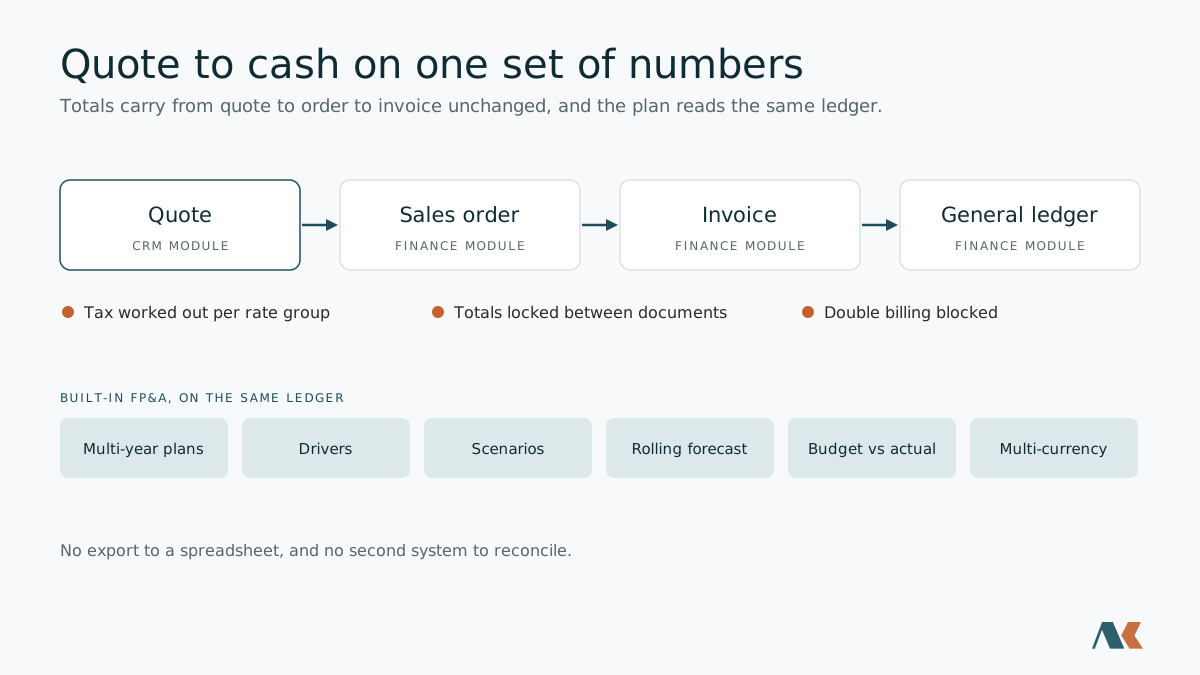
Because CRM and Finance are modules of the same system, a quote becomes a sales order and then an invoice without being typed again. Totals are locked between documents, so what the customer signed is what they are billed, and the database blocks billing the same order twice. Tax is worked out per tax-rate group on invoices and bills, including US sales tax, Canadian tax, UK VAT and Australian GST.
FP&A built in, not bolted on
Planning reads the same ledger the books are kept in:
- Multi-year plans with drivers, including pipeline and workforce drivers
- Base, best and worst scenarios and a rolling forecast
- Budget versus actual, budget roll-forward and multi-year trend
- Debt and amortization schedules
- Plan consolidation across entities
- Multi-currency, with foreign-currency postings to the ledger and plans converted at the rate shown
For EU customers, the module also generates and checks e-invoicing documents to the EN 16931 standard for Belgium (Peppol), France (Factur-X) and Germany (XRechnung).
Why this beats the usual finance stack
Against QuickBooks. QuickBooks is the default for small businesses, and its bank feeds also suggest categories. The difference is everything around the ledger. QuickBooks has no sales pipeline, so deals live somewhere else and invoices start from a blank form, and planning beyond a simple budget usually means a spreadsheet or another subscription. In Aurakore, the quote that won the deal becomes the invoice, and multi-year plans, scenarios and a rolling forecast sit beside the books. More in Aurakore vs QuickBooks.
Against NetSuite. NetSuite is a capable ERP for larger companies. It is also typically sold by annual quote, with modules and users priced separately, and implemented by a partner over months. AI features and planning are separate line items. Aurakore publishes its prices, includes AI with every seat, and puts FP&A in the same product. More in Aurakore vs NetSuite.
Against a CRM plus a separate accounting app. Teams on Salesforce or HubSpot usually sync deals to an outside accounting product, and every sync is a place where numbers drift. In Aurakore there is nothing to sync: the CRM booking and the ledger entry are one record.
Plans
Finance and Accounting is in every plan. Starter is $79 per user per month billed annually and includes CRM, Finance, Marketing, and Travel and Expense. Premium is $109 per user per month billed annually and includes all ten modules. AI is included with every seat.
This post is about Aurakore ERP.
Explore Aurakore ERP