Inside the Aurakore CRM, from prospect brief to booked deal
How the Aurakore ERP CRM module researches accounts with cited sources, runs approved email sequences, prices quotes with tax, and closes the deal when the booking lands in Finance.
Most CRMs are a place to type what already happened. The CRM module in Aurakore ERP is built to do the work in between: research the account, draft the outreach, price the quote and record the result, with a person approving the steps that matter.
This post walks through what the module does today, and where it is different from the CRM products most teams compare it with.
It starts with research you can check
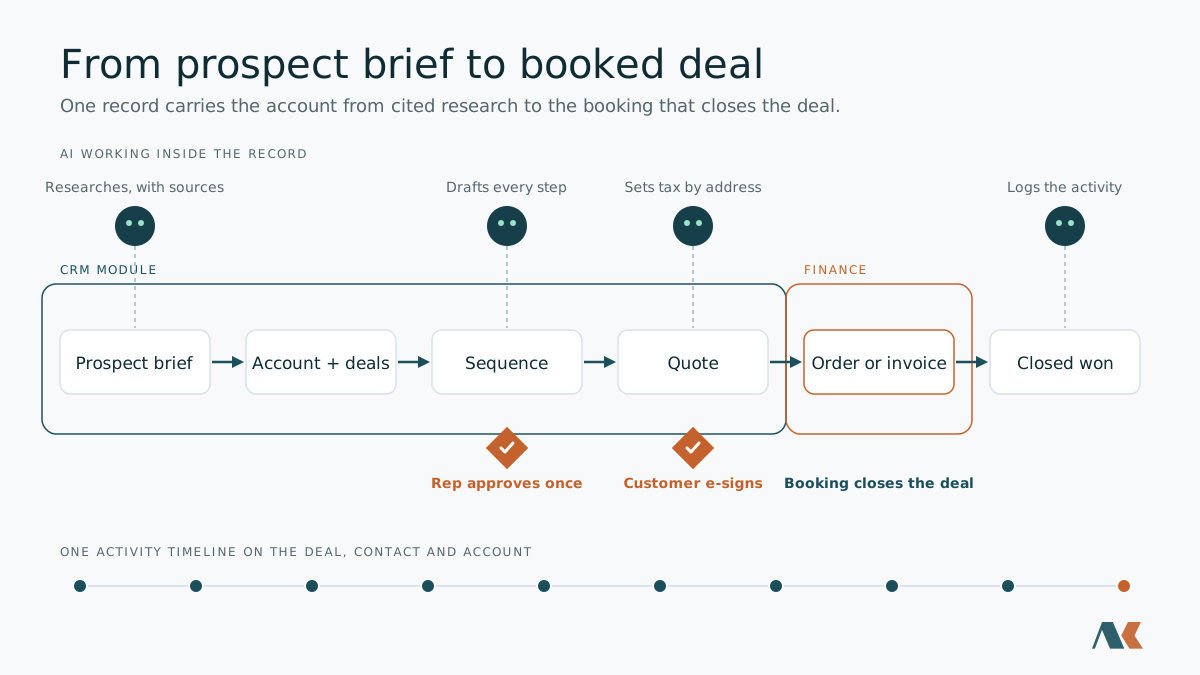
A prospect brief researches a company and shows its sources. You see who the company is, the signals around it (job posts, news, the technology on its site), what it likely uses today and a fit score for each product you sell, computed from that evidence rather than guessed.
When the brief looks right, Add to CRM creates the account and one opportunity per product. Contacts added from a brief get a confirmed work email looked up for them. Phone numbers are fetched only when someone asks, and for contacts in the EU and UK only work email is used.
Sequences that send after one approval
A rep edits a sequence, approves it once, and the email steps then send on schedule from the rep's own mailbox. Calls, SMS and LinkedIn steps become reminder tasks, because those channels should have a person on them.
Guardrails are built in. A sequence stops on a reply, a bounce or an unsubscribe, and the rep can pause, resume or stop it at any time. Customer replies that still need an answer collect in a Replies view, and sent mail is filed to the deal, contact or account it belongs to.
Quotes that already know about tax
The quote builder works from the customer record. Tax is worked out from the customer's address for the US, Canada and the EU, and EU VAT is never applied automatically: a person decides. Quotes go out as branded PDFs or for e-signature, and a signed quote is accepted on its own.
From the quote editor, an accepted quote converts to a sales order or an invoice in the Finance module. That booking closes the deal as won. Nobody updates the stage by hand, and the forecast reflects revenue that was actually booked.
A pipeline managers can trust
- Deal board. Drag deals between stages. A stage move asks for a reason and can be moved back. Managers get a team view and can reassign deals.
- Forecast. The quarter's call, rep by rep, on your own fiscal quarters or a custom range, with a nightly snapshot so you can see how the call moved.
- Intelligence. Commit, likely and best-case landings, coverage against quota, the odds of hitting quota from a Monte Carlo run, what-if sliders, win-rate trend and a comparison with last quarter.
- Lost deals that teach you something. Closing a deal as lost requires a reason, a next step and a revisit date, and the follow-up task is created for you.
- After the sale. Every customer has a success owner and a renewal owner, ownership hands over when a deal is won, and a daily job keeps renewal work on schedule.
The AI assistant works on the same data. Ask it to analyze the pipeline, log an activity, update a contact or draft a quote. When it proposes moving a deal to another stage, you get an approval card first.
Why this beats a CRM plus add-ons
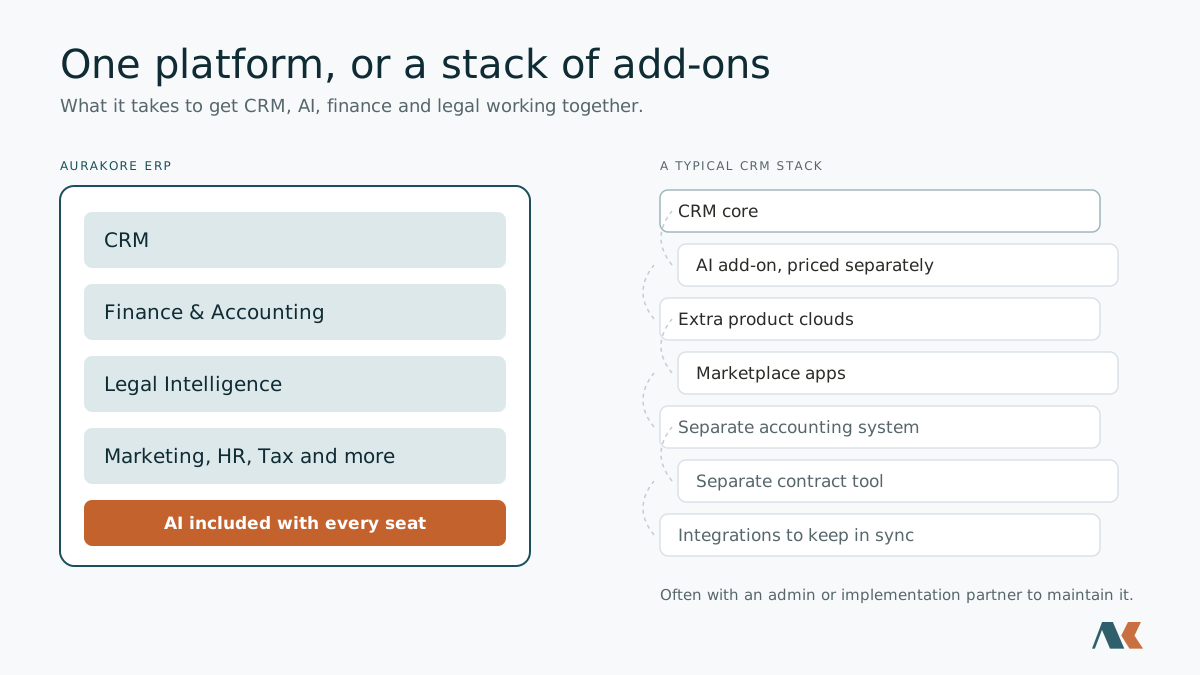
Against Salesforce. Salesforce is a powerful CRM, and many teams run it well. But its AI is sold as an add-on, quote-to-cash is a separate product, and accounting lives in another system that has to be integrated. Many customers rely on an admin or an implementation partner to keep it all running. In Aurakore, AI comes with every seat, and the quote, the order, the invoice and the ledger are the same record. More in Aurakore vs Salesforce.
Against HubSpot. HubSpot is easy to start with, but price rises with each tier and each hub, and there is no general ledger: invoices and payments sync out to a separate accounting product. In Aurakore, a booking posts into the Finance module of the same system. More in Aurakore vs HubSpot.
Against an ERP with CRM attached. Full ERP suites can hold customer records, but the CRM side tends to be a second-class screen, and projects typically run for months with a partner. Aurakore's CRM is a first-class module with its own forecasting and intelligence, and self-serve customers are working in weeks. More in Aurakore vs NetSuite.
Plans
The CRM module is in every plan. Starter is $79 per user per month billed annually and includes CRM, Finance, Marketing, and Travel and Expense. Premium is $109 per user per month billed annually and includes all ten modules. AI is included with every seat. You can try the CRM free for 30 days, with no credit card.
This post is about Aurakore ERP.
Explore Aurakore ERP